25 December 2009

Celebrity justice, broken clocks & hidden Tigers

I'm a bit late in writing a substantial comment on the celebrity name suppression issue regarding a musician's sexual antics in Wellington earlier this year. I just have a couple of thoughts I want to get down, and will not be breaking the court order. However, as most people probably realise, it seems anyone who really wants to know can find out the suppressed name anyway.

This brings up the first issue. I wonder of this incident has been the death knell for that kind of name suppression. It seems to me that, rightly or not, people just do not respect this use of name suppression. I'm referring to when the suppression is for the benefit of the perpetrator, as opposed to the victim, and when the intent is to protect a reputation, as opposed to allowing for the completion of a fair trail. Given the way modern communication technology operates, I just can't see any other similar decision holding any more authority than this one.

Secondly, it's very rare that I have any sympathy or find much agreement with right-wing blogger Whaleoil (Cameron Slater), but I do broadly support his stance on this issue. Slater is in some trouble with the authorities after allegedly giving out enough clues to identify the entertainer and another celebrity who also has name suppression. I do not know so much about the latter case and the circumstances are different, so for the purposes of this post I'll be addressing the first case only.

I see this matter as basically being a question of whether the courts should concern themselves with protecting the reputation of an offender. The reason given for the discharge without conviction and permanent name suppression is that otherwise the consequences for the offender would supposedly have been out of proportion to the offence committed. Finlay Macdonald touched on this in a Sunday Star Times article (quoted from this Hard News column):

Yet the media are the very ones who create such a special class in the first place, and there's something a little disingenuous about stoking society's celebrity obsession on the one hand while demanding celebrities receive no special treatment on the other. One might even call it hypocritical.

You can call it the price of fame, but surely the price should be relative to the alleged crime.


Well, I don't like the way the media encourages the public's inane celebrity obsession either, but that is a separate issue. It is not hypocritical for some, including some in the mainstream media, to maintain that celebrities should be treated the same as "regular" citizens when it comes to conviction and sentencing for their criminal behaviour. As for the price being relative to the crime, it seems to me that the court's role is to ensure the sentence it applies is fair for the crime committed, taking reasonable account of the circumstances in which the criminal act took place. It is not its role to protect the accused from the wider repercussions of their own behaviour. That is what is happing here that Macdonald and Russell Brown et al don't seem to appreciate: the perpetrator of a crime is being given special protection from the consequences of his asinine actions simply because those actions brought him to the attention of the courts.

Consider another recent example of a misbehaving celebrity: the Tiger Woods affair (well, affairs). I've found much of the reaction to his transgressions somewhat sanctimonious. I don't condone what he did, but is it really that bad in the scheme of things? Should we even be so precious when we find out that many of these sports superstars are not (shock horror) the ideal role models we seem to want them to be? Macdonald again, on the NZ celebrity case:

The offence wasn't trivial, but in the context of the horrors the courts routinely deal with, it's hard to argue it merited more coverage than a far more serious assault by a nonentity.


Wouldn't this sentiment apply to Woods? Does he deserve more scrutiny and media coverage than any number of other people who have engaged in similarly dodgy conduct? The NZ celebrity, by comparison, has benefited from his conduct being regarded as actually criminal - putting it before the court and thus providing the option of name suppression at the conclusion of the process. As I suggested on Public Address [see comments for my original typo], the way for a celebrity to protect his reputation from the damage that can come from behaving like a fuckwit is to avoid behaving like a fuckwit. His reputation is his to look after, not the courts. Had the judge decided not to suppress the identification of the offender, any price this celebrity paid in terms of his reputation should be seen as the result of his own actions, not as a punishment of the court.

Back to Russell Brown from his blog:

Ironically, had he actually been named, the man would have been guaranteed a sympathetic run from the same media organisations who have been pursuing him -- in exchange for an interview. The Sunday Star Times was, for example, only too happy to softball Clint Rickards in exchange for pictures with his daughter. Such is the trade of celebrity value. The moral line can easily be moved to suit.

Yes yes, the media can be pretty shit. A capricious, shallow, hypocritical lot - well, much of the time. But the 'pro-suppression' arguments seem to be more about a distrust and (understandable) dislike of the way some aspects of the media work in regards to this sort of thing, rather than actual philosophical objections in terms of the broader justice issue. A more legitimate concern would be with why is the media and society in general so ridiculously celebrity obsessed, and relatedly, why does society naively persist in treating celebrities as role models or paragons of human conduct?

18 December 2009

Shoot from the hip

First, a quick note from the Admin part of my brain. I have been especially slack lately in blogging, exacerbated by now being back in full time employment. Nevertheless, I hope to get in at least one, maybe two more blog posts on Booksmart before going away on Boxing Day for two weeks for my first trip to the South Island of the country I have lived in for virtually my whole life.

Second, another brief plug for Photospace (no, I don't get paid for this!). It's been done before, but I quite like the look of the upcoming "from the hip"-style photography show from Gabrielle McKone. (I thought August 09 was a particularly good month.)


Three Stories Up opens Monday, 21 December outside Jimmy Cafe on Courtenay Place. The show is curated by Photospace's James Gilberd, and will be the next light box exhibition at Courtenay Place Park.

07 October 2009

Some links to optimism

I was cleaning up round the place and found this here blog. Better give it some exercise, I guess.

I had reason to link to a presentation from a TED conference during a debate I had on on morality over at Public Address. It's a good talk by Steven Pinker about the the perception many seem to have that the world is a more violent and brutal place than ever. Pinker mentions the "non-zero sum" theory by Robert Wright, and I have since noticed that this is expanded on by Wright in an earlier TED talk in 2006.

I don't entirely agree with everything Wright proposes, but no doubt there's something to it, and it makes for useful viewing before the Pinker talk from 2007. Pinker argues that (contrary to common views) we have in fact become a lot less violent over the centuries, and we are living in the most peaceful time in our history. He suggests reasons why things have improved and makes some very interesting points about the way we often perceive violence, the media's role in this, and how we should be a lot more positive, in some ways, about what humanity has achieved.

Robert Wright on optimism

Steven Pinker on the myth of violence


TED talks are covered by Creative Commons license.

21 July 2009

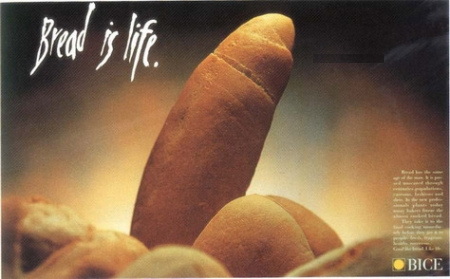
Follatio bread

It was the big news of last week: Bread.

Not the shitty band, the food product. In what was probably one of the biggest news stories in the nation during the latter part of Wednesday afteroon, the debate raged as to whether folate should be added to bread (a process known by the technical name "folation").

It looks like the Government may eventually arrange for the addition of folate to bread. However, it won't be compulsory, according to the Timaru Herald: "While the Government says it will seek feedback on the moratorium and other options before a final decision is made, by signaling that a moratorium is its preferred option, Mr Key has effectively called a halt to the compulsory regime."

I think this is a good thing - I don't think bread should be folated against its will.

I don't usually do polls, mostly because I don't have any readers to answer them, but this is important. Should we be folating bread?

The polls are now open.

UPDATE: Polls closed. The overwhelming majority (75%) agree: It's hard to believe people voted for that dick Tony Ryall.
A quarter believe we should not add folate, and no one is in favour of folating bread.

03 July 2009

Bat for Bowie

Aging and death - fun topics, right? Well, they seem especially prominent to me at the moment. Publicly, there was Farrah Fawcett, Michael Jackson et al. Privately, my dad is not in good health. And I don't know about you, but I keep getting older. So I've decided to make two brief recommendations for your music collection that deal, to some degree, with such matters.

Firstly, the sublime Two Suns by Bat for Lashes.


Now don't be fooled, Bat for Lashes is a band only in the sense that Nine Inch Nails is a band. Bat for Lashes is really Natasha Khan, an England-based artist. This is from her website bio:

Born in 1979, yet combining influences that span decades, Natasha’s work dwells in the elemental, emerging in timeless forms.

But just ignore that Earth-child shit, her music is actually really good. The latest album is apparently largely inspired by "a coming together and journeying apart of two suns, two half hearts... a King and a Queen...". Thank God for relationships. If it wasn't for them not only may we not have been born, but no one would have anything to sing about.

Anyway, the last track on the album, 'The Big Sleep', addresses death pretty bluntly... but hey, you can make it your ringtone if you like!

Enough with the cynicism - Two Suns is a fantastic, dreamy and yet soaring collection of songs. Its gorgeous, delicate soundscape has a lullaby-like quality at times, and yet also features surprisingly funky beats. (The beat programming and bass was partly courtesy of Brooklyn psychedelic experimental band Yeasayer). As the music reviewer cliche goes, it's an album that rewards repeat listening.

Here's the first single off the album, "Daniel", mashed up on You Tube to go with the Karate Kid. [Edit: Sometimes that link works and sometimes not, but you can probably google the You Tube vid.]

(Update: I have just read this interesting article from The Telegraph (which coincidantly used the same photo as I did). It points out Natasha is the cousin of the famous squash player Jahangir Khan, whom her father, Rehmat Khan, coached for several years. This period included his exceptional five year unbeaten run that lasted more than 500 games, and was ended by New Zealand's Ross Norman.)

Along with Two Suns, I happen to be listening to a lot to the excellent David Bowie album Reality. In many ways Bowie is at the opposite end of the spectrum to Khan. He ain't young, he's not new on the music scene, and he's not a cute chick. But he is British and he is talented. Reality is generally accepted to be arguably Bowie's best album since Scary Monsters. (I've heard it argued that Let's Dance or Heathen are better.)

I think Reality is massive fun, and one of the great albums of this century. It does somewhat dwell on those issues of old age, death, isolation and so forth. At least half the tracks are overtly orientated to issues of old age, loneliness and approaching death. But it's sincere, thoughtful and good pop music all at the same time.

Not every song is ostensibly about such morbid matters. For example, there's the enigmatic lead single 'New Killer Star', with what seems to me to be quite humourous lyrics:

See my life in a comic
Like the way they did the Bible
With the bubbles and action
The little details in colour
First a horseback bomber
Just a small thin chance
Like seeing Jesus on Dateline
Let's face the music and dance.

Nevertheless, even on such tracks, death seems always on his mind. After all, the album's first line is a 9/11 reference: "See the great white scar over Battery Park". In light of this, the ambiguous but catchy chorus of 'New Killer Star' seems somehow poignant:

All the corners of the buildings,
Who but we remember these,
The sidewalks and trees...

Now, there's your earth child.